The Ocean Race has a new HQ: “We Are Excited to Build a Future in Porto.”

The Ocean Race is putting down roots in Porto until 2040 with plans to turn a global sporting spectacle into a local sporting culture.

Why The Ocean Race's 14-year Porto partnership is as much about the business of offshore sailing as it is about the competition.
Porto is becoming the global headquarters of The Ocean Race until 2040. Three round-the-world race starts, a new museum and a bigger play for ocean science. But behind the announcement is a more interesting question: what does a sport built on constantly moving gain by finally staying somewhere?
For more than 50 years, The Ocean Race has made a business out of leaving land behind.
Sailors spend weeks sharing cramped spaces, operating on broken sleep, battling weather systems and trusting people they might not even want to sit next to at dinner. It's one of the few sports where the difference between success and disaster can come down to whether six exhausted people can still function as a team.
Now, the organisation behind it is making a very different kind of commitment.
It's putting down roots.
From 2028, Porto will become The Ocean Race's global headquarters, part of an agreement with Portuguese authorities running until 2040. Three editions of the round-the-world race will start there, alongside a new museum, ocean science initiatives and an ambitious plan to build an offshore sailing industry around the city.
It's a significant sporting deal. But it could also be something bigger: an attempt to turn a competition that captures the world's attention every few years into something people engage with all year round.
And there are some uncomfortable questions hiding beneath the excitement.
The Lowdown
Porto gets the keys. The Ocean Race will establish its global headquarters in the Portuguese city, with activities beginning in 2028.
Three big departures. The round-the-world race is scheduled to start from Porto in 2030, 2034 and 2038, with a special race in 2028.
Portugal gets more than a starting gun. At least six additional Ocean Race Europe events are planned across the country through 2040.
A new sailing ecosystem. The plan includes a waterfront headquarters, a museum, scientific programmes and ambitions to attract teams and marine businesses.
Alicante isn't disappearing. The 2027 race starts in Spain, with a new collaboration promised but not yet explained.
The unanswered question. Can Porto create a lasting culture and economy around offshore sailing, or will the biggest impact still arrive and leave with the fleet?
“We Are Excited to Build a Future in Porto.”
Richard Brisius, Race Chairman, The Ocean Race
Most sports want somewhere they can call home. Football clubs have stadiums. Tennis has Wimbledon. Formula 1 has Monaco, even if its business is increasingly global.
Offshore sailing has a more complicated relationship with geography. The whole point is to leave.
Which makes Porto an interesting choice.
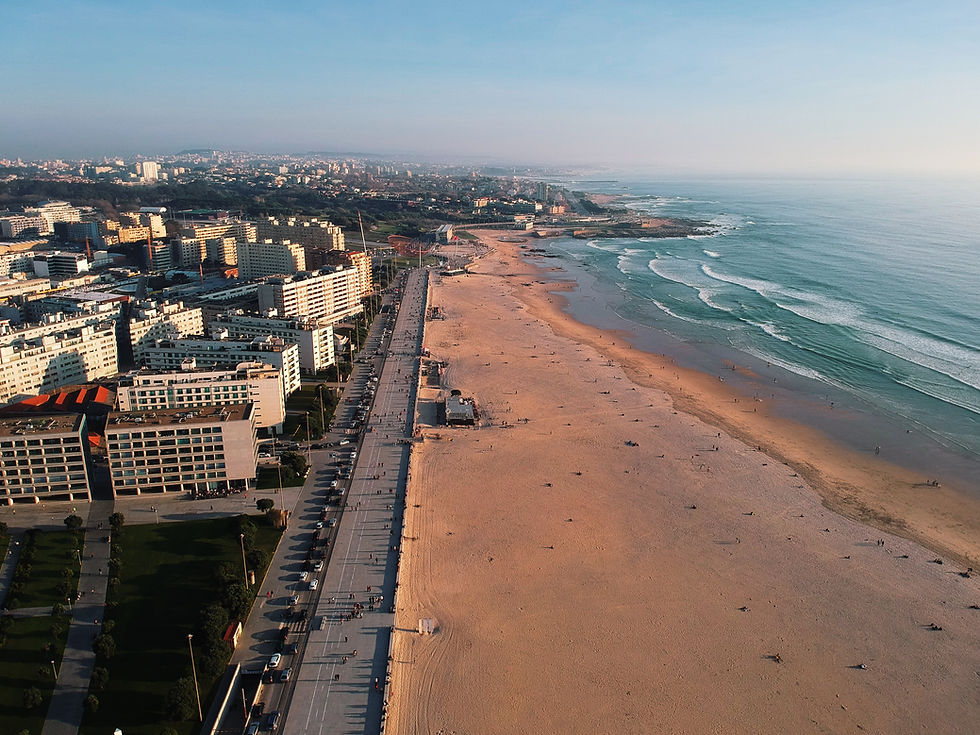
The city's Atlantic location, maritime identity and sailing connections offer The Ocean Race something it hasn't always had: a long-term base around which teams, partners and businesses can organise.
The new headquarters will occupy a historic waterfront building near Porto City Park, with public activities planned from 2028.
But buildings don't create sporting culture on their own.
The real test will be whether sailors begin relocating, teams establish operations and younger Portuguese talent finds a route into a sport with notoriously high barriers to entry.
A headquarters is an address. A home is somewhere people actually want to stay.
“It Gives the Next Generation of Portuguese Sailors the Chance to See the World's Best Teams Up Close.”
Mariana Lobato, Portuguese sailor and co-skipper of the winning United by the Ocean Team in The Ocean Race Atlantic 2026
There's a difference between watching elite sport on a screen and watching it happen at the end of your own street.
One is entertainment. The other can become a possibility.
For young Portuguese sailors, a permanent Ocean Race presence means the world's best offshore teams might no longer feel like a distant, exclusive club.
They could become people training in familiar waters. Boats being prepared in local marinas. Careers that suddenly feel less imaginary.
But proximity isn't the same as access.
Offshore sailing remains an expensive sport, with relatively few opportunities to reach the professional level. Having the best teams nearby doesn't automatically mean a talented teenager can afford to join them.
That's where this partnership could make a real difference — if the infrastructure leads to training, employment and pathways into professional sailing rather than simply better views of expensive boats.
Because the next generation doesn't just need heroes.
It needs a way onto the boat.
“This Project Is About Much More Than a Headquarters or a Sporting Event.”
Pedro Duarte, Mayor of Porto
Here's the part that should interest people who don't care about sailing.
Porto isn't just buying into a race. It's backing a place in the international sporting economy.
Major events bring attention. But attention is temporary.
The cameras arrive. The sponsors take their photographs. The waterfront fills with people. Then everybody leaves.
The more valuable proposition is what stays behind.
The Ocean Race wants Porto to attract marine businesses, researchers, engineers, educators and an international sailing community. Portugal also sees the partnership as a way to develop its blue economy — the industries and activities connected to the ocean.
It's a much bigger ambition than filling hotel rooms for race week.
But the announcement doesn't disclose the financial commitments, projected jobs or measurable economic returns.
So the real story won't be how spectacular the fleet looks departing Porto in 2030.
It will be what happens on an ordinary Tuesday in February when nobody is racing.
Are there businesses hiring? Young sailors training? Researchers collaborating? Local people actually using the facilities?
That's the difference between hosting an event and building something that belongs to a city.
“Help Us Do More for the Ocean.”
Richard Brisius, Race Chairman, The Ocean Race
There's an obvious contradiction in international sailing.
The sport depends on the ocean. Its events also depend on international travel, complex logistics and global commercial operations.
The Ocean Race has increasingly positioned ocean health as part of its identity, using its global platform to support science, education and advocacy.
Porto is intended to give that work a permanent centre.
Plans include a museum, educational activities, scientific programmes and The Ocean Race Summit Porto on 19 November 2026.
These are substantial ambitions.
But sport has become very good at talking about purpose. Almost every major organisation now has a sustainability strategy, an educational mission and a polished explanation of its legacy.
The harder question is what changes because of it.
Does the research produce useful scientific findings? Do educational programmes reach children who wouldn't otherwise have access? Can the organisation demonstrate an environmental impact beyond visibility and awareness?
Because the ocean doesn't care how good the campaign looks.
And The Ocean Race has something most environmental organisations don't: athletes whose entire existence depends on understanding what happens out there.
That's potentially valuable. It just needs to amount to more than a story.
“A Future That Will Serve Our Sailors, Teams and Partners.”
Richard Brisius, Race Chairman, The Ocean Race
One of the least glamorous words in professional sport is certainty.
But ask anyone who has tried to build a team, find sponsors, recruit talent or plan a campaign several years in advance.
Knowing where the next competition will start matters.
The Porto agreement establishes a schedule that stretches to 2038 and a partnership continuing until 2040.
For teams and commercial partners, that creates a degree of predictability in a sport where campaigns require substantial funding and preparation.
There's an interesting tension here.
The Ocean Race sells unpredictability: storms, exhaustion, tactical gambles, equipment failures and the frightening possibility that everything can change in minutes.
But behind that spectacle, the organisation needs stability.
The more unpredictable the racing, the more dependable everything surrounding it has to become.
Perhaps putting down roots is precisely what allows the race to keep pushing boundaries at sea.
“The Atlantic Is Part of Our History and Our Identity, but Increasingly It Is Also Part of Our Future.”
Pedro Duarte, Mayor of Porto
And then there's Alicante.
The Spanish city has become synonymous with The Ocean Race, hosting five consecutive round-the-world starts, with a sixth scheduled for 17 January 2027.
Now Porto has the long-term headquarters agreement and three future race starts.
The announcement makes clear that Alicante will continue to play a role, with details of another collaboration to come.
But what that means in practice remains unclear.
It's one of the most intriguing parts of the move.
Sport is full of relationships between cities and major events. They create jobs, memories, local pride and a sense of ownership.
A race might belong to the world, but the people who have built their livelihoods around it often feel it's theirs.
Porto's gain doesn't necessarily have to become Alicante's loss.
Still, the future relationship between the two cities will say plenty about how The Ocean Race intends to grow without leaving its existing communities behind.
What's Next?
When | What's happening |
19 November 2026 | The Ocean Race Summit Porto |
17 January 2027 | Round-the-world race starts in Alicante |
2028 | Porto headquarters activities begin, alongside a special race |
2030 | First round-the-world start from Porto |
2034 | Second round-the-world start from Porto |
2038 | Third round-the-world start from Porto |
2040 | Current long-term partnership runs through this year |
The Ocean Race has spent more than half a century proving that humans can achieve extraordinary things when they leave the safety of land.
Its next challenge is almost the opposite.
Can it build something extraordinary by staying put?
And can Porto become a place where the sport doesn't just visit, but actually lives?
That's a far more interesting story than another ribbon-cutting ceremony.