“I'm still trying to realise what has just happened.” - The 'Kid' Who Replaced Lewis Hamilton Has Just Become World Champion

Mercedes gambled on a teenager, watched him struggle and then watched him become the youngest champion F1 has ever seen

The kid Mercedes backed before he was old enough to drive on public roads has become Formula 1's youngest-ever World Champion. But the most revealing part of Kimi Antonelli's story isn't the speed. It's what happens when a teenager is handed one of the most scrutinised seats in sport, and everyone expects him to grow up in public.
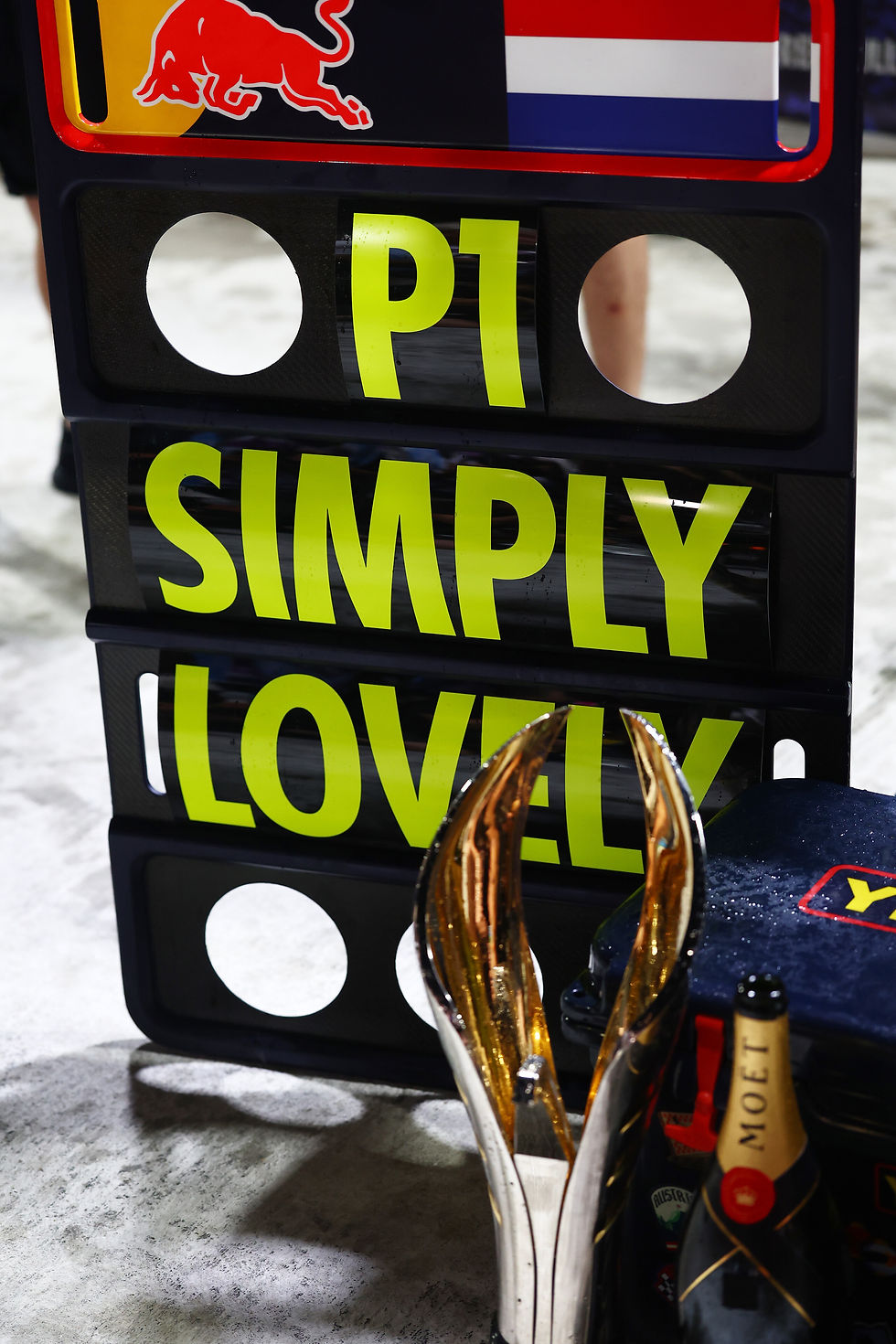
On 1 November 2026, Andrea Kimi Antonelli finished third at the Mexico City Grand Prix and became Formula 1 World Champion at 20 years and 68 days old. He broke Sebastian Vettel's youngest-champion record, ended Italy's 73-year wait for a drivers' title and delivered Mercedes its first World Championship from a graduate of its junior programme.
He didn't win the race that made him champion. Max Verstappen did. Lewis Hamilton finished second. Antonelli took third and the title.
There's something beautifully awkward about that. The biggest moment of his career arrived while two former world champions stood above him on the podium. No final-lap miracle. No Hollywood finish. Just the mathematical certainty that nobody could catch him anymore.
For a driver whose career has been measured against other people's expectations almost from the beginning, perhaps that was fitting.
The Lowdown
The record: At 20 years and 68 days, Antonelli is the youngest world champion in F1 history, with nine Grand Prix victories so far in 2026.
The pressure: His rookie season almost swallowed him. Replacing Lewis Hamilton at Mercedes meant every mistake became a referendum on whether he belonged.
The turning point: Winning in China gave him his first victory. Japan gave him the championship lead — and the belief that he could actually win the title.
The comeback: He turned Spa, the scene of one of his worst weekends in 2025, into a victory in 2026. He also won at Monza after starting 19th.
The human story: His father's racing team lost its own championship on the day Kimi won his. The family had travelled from Italy to witness the moment.
The uncomfortable question: How much of this title belongs to Antonelli, and how much to Mercedes' dominant car? The answer is probably both.
Formula 1® - The Official F1® Website+3
“I let the pressure kind of destroy me.”
Before the world championship, there was a teenager wondering whether he'd been promoted too soon.
Mercedes didn't simply give Antonelli a Formula 1 seat in 2025. It gave him Lewis Hamilton's seat. Seven world championships' worth of expectation, dumped into the lap of a driver who hadn't yet turned 19.
His first season had flashes of serious promise, including a Sprint pole in Miami and a first Grand Prix podium in Canada. But the European races were brutal. Mistakes, qualifying struggles and retirements began to accumulate.
The pressure wasn't just about losing races. It was about letting down the people who had taken a chance on him, particularly Toto Wolff.
After the European stretch, a meeting with Mercedes helped reset his approach. The experience taught him how to manage the demands of an entire race weekend, not simply how to drive the car faster.
That's an enormous difference. At junior level, talent can make you look untouchable. In F1, talent gets you into the paddock. Then come the politics, public judgement, commercial commitments, teammate comparisons and the permanent fear that somebody younger is already coming for your seat.
Antonelli's 2026 championship looks different when you remember that just a year earlier, he was struggling to cope with the job.
“Not as tense as I was last year.”
The biggest change in Antonelli's second season wasn't simply the Mercedes.
He began prioritising the experience of racing rather than becoming consumed by what each result might mean. Focusing on the car, the next session and the work directly in front of him gave him more room to perform.
It sounds almost suspiciously simple. Enjoy your job and you'll do it better.
Except there's nothing particularly simple about enjoying a job while millions of people assess your competence every fortnight.
There is also a privilege in Antonelli's position. Mercedes got the 2026 regulations right. He had one of the strongest cars on the grid, substantial engineering resources and an organisation that had invested in him for years.
But having the machinery to win and being able to use it under pressure are different things. George Russell was experienced, quick and driving the other Mercedes. Antonelli still had to beat him.
The title was built on the ability to recover results when weekends went wrong, rather than treating every setback as a personal catastrophe.
“Actually, we can win this.”
China was the breakthrough. Antonelli took his first pole position, became the youngest polesitter in F1 history and converted it into his maiden Grand Prix victory.
Then came Japan.
Another pole. Another victory. This time he left Suzuka leading the World Championship, the youngest driver ever to hold that position.
Until then, winning the championship had been an ambition. From Suzuka onwards, it became a genuine possibility.
And that changes the atmosphere inside a team.
The conversation shifts from chasing a result to protecting a lead. Every strategy decision becomes heavier. Every tyre choice carries more consequence. Your teammate isn't just another driver helping the team collect points; he's somebody you have to finish ahead of.
Antonelli's season included a run of five consecutive wins and victories at circuits such as Monaco and Spa. There was speed, certainly, but also growing evidence that the rookie's erratic weekends were becoming the exception rather than the rule.
The kid who was once trying to justify his presence at Mercedes was becoming the benchmark inside it.
“I'll make it up.”
This might be the most revealing detail of the entire championship weekend.
Kimi's father, Marco, was fighting for a championship with his own racing team in Italy. It went wrong. His team was taken out of contention and lost the title.
Kimi saw his father's disappointment that morning.
Later that day, the 20-year-old became Formula 1 World Champion.
The family had made a huge effort to be in Mexico, travelling from Italy despite Marco's own racing commitments. Throughout the season, his father had also been a regular presence, providing support through both the exceptional weekends and the difficult ones.
It's tempting to frame all of this as a neat father-and-son sporting fairytale.
But there's something more recognisable underneath it: two people in the same family, involved in the same unforgiving business, experiencing completely opposite versions of the same day.
One loses. One wins.
For once, the family's weekend ended with a trophy big enough to make the other disappointment feel smaller.
“I didn't feel good in that period.”
Spa offers the cleanest comparison between the two versions of Antonelli.
In 2025, Belgium was one of the worst weekends of his young career. The difficulties had become so personal that the disappointment spilled into the media pen.
In 2026, he returned and won.
Monza delivered another reversal. At the circuit where his 2024 practice debut ended in a crash, and where his 2025 performance drew public criticism from Toto Wolff, Antonelli drove from 19th on the grid to victory in 2026.
These results matter because they challenge the tidy myth of the naturally fearless prodigy.
Talent didn't prevent the difficult weekends. It didn't insulate him from criticism. And it certainly didn't mean he understood the pressures of F1 the moment he arrived.
What changed was how he recovered.
That's arguably the defining difference between the driver Mercedes gambled on and the one who has now won its championship.
“Until it's done, it's not done.”
By Mexico, everybody knew what was coming.
Fans, guests and people around the paddock were already congratulating Antonelli. He wasn't particularly comfortable with it.
He's superstitious. The championship wasn't technically secure, and he had no intention of celebrating something that hadn't happened.
The weekend itself wasn't flawless.
After starting fourth, he found himself in the middle of a disrupted race, with a red flag undoing some of the tyre advantage Mercedes had created. Following the restart, he reclaimed third place by overtaking Charles Leclerc.
It was enough.
Max Verstappen won the Grand Prix. Lewis Hamilton finished second. Antonelli finished third — and became champion with races still remaining.
The emotional contrast is striking. On the outside, he had looked like a driver in control of the championship for months. Inside the cockpit, on the final laps in Mexico, the magnitude of it was finally catching up.
He reported being in tears before he even crossed the line.
For all the data, simulators, race engineers and meticulous preparation, the sport still occasionally reduces the most technically sophisticated athletes on earth to something quite simple: a young person trying not to cry while doing their job.
“I think I'll stay with number 12.”
Antonelli has earned the right to race with number one on his Mercedes in 2027.
He doesn't want it.
The number 12 has been part of his identity and carries a connection to his racing hero Ayrton Senna. Antonelli also believes retaining it helps him approach the next season as a fresh challenge, rather than an exercise in defending his status.
There's superstition involved too. His previous experiences with number one haven't been particularly encouraging.
Maybe it's a small decision. Maybe it's not.
Formula 1 is obsessed with hierarchy. There is always a number-one driver, a team leader, a future champion, a rising star and somebody who's supposedly past it.
Antonelli has now become the driver everyone else is chasing.
What happens when the young driver who needed protecting becomes the one expected to deliver?
And what happens to George Russell, whose experience was once part of the reason Mercedes could take the risk on a teenager?
Winning the first championship answers an enormous question about Antonelli's ability. It creates several more about his place in the team.
The title proves he belongs.
The next season will test what being the champion does to him.
Quickfire
Drawn from Antonelli's official championship press conference
Q: Which victory meant the most?
Kimi: His home win at Monza is a favourite, alongside his first victory in China. Spa also stands out because of the difficulties he'd experienced there in 2025.
Q: Will he take number one next season?
Kimi: No. He intends to keep number 12.
Q: What changed his belief about the championship?
Kimi: Winning at Suzuka and taking the championship lead gave him the confidence that the title was achievable.
Q: How will he celebrate?
Kimi: Time with family and friends first, with a bigger celebration planned at home after Brazil.
Q: What's next?
Kimi: More work, more improvement, and a likely tighter fight with George Russell, Red Bull, Ferrari and McLaren in 2027.